
Intellivision games list: every release and region
All 125 Intellivision cartridges released from 1979 to 1989, from Mattel, third-party publishers and INTV, with where each one was sold: North America, Europe, Japan and Brazil.
This is the complete list of games released for the Mattel Intellivision during its life, from the first cartridges in 1979 to INTV Corporation’s last ones in 1989. It has all 125 cartridges: 61 from Mattel Electronics, 43 from other publishers such as Activision, Imagic, Coleco and Parker Brothers, and 21 from INTV Corporation, which took over the Intellivision after Mattel Electronics closed in 1984. For each game the list shows where it was sold: North America, the UK and Europe, Japan or Brazil. Use the search box to find a game, choose a filter to see one region or publisher, and tick the games you own.
Your ticks are saved in your browser, so the list remembers them next time you visit on the same device. They never leave your device.
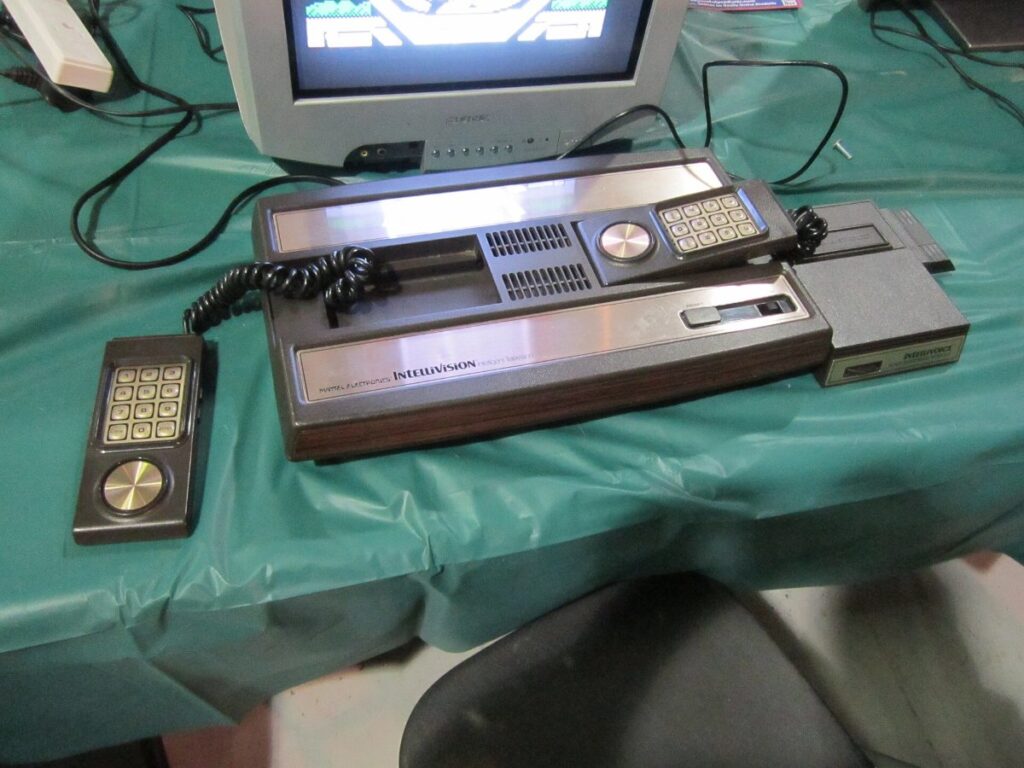
My own Intellivision was a Christmas present in 1980. The story is below the list.
Turn on JavaScript to search the list and tick off the games you own.
| Game | Year | Sold in | Publisher |
|---|---|---|---|
| ABPA BackgammonSold as Backgammon (Sears, Japan, Europe) | 1979 | North America, Europe, Japan | Mattel Electronics |
| Advanced Dungeons & DragonsSold as Labirintos e Dragões (Brazil) | 1982 | North America, Europe, Brazil | Mattel Electronics |
| Advanced Dungeons & Dragons: Treasure of Tarmin | 1983 | North America, Europe | Mattel Electronics |
| Armor BattleTwo players only | 1979 | North America, Europe | Mattel Electronics |
| Astrosmash | 1981 | North America, Europe, Brazil | Mattel Electronics |
| Atlantis | 1982 | North America, Europe, Brazil | Imagic |
| Auto Racing | 1980 | North America, Europe, Japan, Brazil | Mattel Electronics |
| B-17 BomberMade for the Intellivoice; runs without it, but with no speech · Mattel made no version with foreign-language speech, because its bombing missions are over France, Germany and Italy; Classic Consoles Center says it was not sold in Germany. | 1982 | North America, Europe | Mattel Electronics |
| Beamrider | 1983 | North America, Europe, Brazil | Activision |
| Beauty & the Beast | 1982 | North America, Europe | Imagic |
| Blockade Runner | 1983 | North America | Interphase |
| Body Slam: Super Pro Wrestling | 1988 | North America | INTV Corporation |
| Bomb SquadMade for the Intellivoice; runs without it, but with no speech · Sold in Europe only in the American edition. | 1982 | North America, Europe | Mattel Electronics |
| BoxingTwo players only | 1981 | North America, Europe, Japan, Brazil | Mattel Electronics |
| Bump 'n' Jump | 1983 | North America, Europe, Brazil | Mattel Electronics |
| BurgerTimePacked with the Intellivision II in the United States. | 1983 | North America, Europe, Brazil | Mattel Electronics |
| Buzz Bombers | 1983 | North America, Europe, Brazil | Mattel Electronics |
| CarnivalSold in Europe under the CBS Electronics label · Coleco's cartridge does not work on the Intellivision II | 1982 | North America, Europe | Coleco |
| Centipede | 1984 | North America | Atarisoft |
| Championship TennisEurope 1985, North America 1986 | 1985 | North America, Europe | Dextell |
| CheckersSold as Draughts (UK and Australia) | 1979 | North America, Europe | Mattel Electronics |
| Chip Shot: Super Pro Golf | 1987 | North America | INTV Corporation |
| Commando | 1987 | North America | INTV Corporation |
| Congo Bongo | 1983 | North America | Sega |
| Defender | 1983 | North America | Atarisoft |
| Demon Attack | 1982 | North America, Europe, Brazil | Imagic |
| Dig Dug | 1987 | North America | INTV Corporation |
| Diner | 1987 | North America | INTV Corporation |
| Donkey KongSold in Europe under the CBS Electronics label · Coleco's cartridge does not work on the Intellivision II | 1982 | North America, Europe | Coleco |
| Donkey Kong Jr.Sold in Europe under the CBS Electronics label | 1983 | North America, Europe | Coleco |
| Dracula | 1983 | North America, Europe | Imagic |
| Dragonfire | 1982 | North America, Europe | Imagic |
| The Dreadnaught FactorSold as Desafio Estelar (Brazil) · Does not work on a PAL console. | 1983 | North America, Brazil | Activision |
| The Electric Company: Math FunSold as Brincando com a Matemática (Brazil) | 1979 | North America, Europe, Brazil | Mattel Electronics |
| The Electric Company: Word FunDoes not work on the Intellivision II | 1980 | North America, Europe | Mattel Electronics |
| Fathom | 1983 | North America, Europe | Imagic |
| Frog BogSold as Pântano dos Sapos (Brazil) | 1982 | North America, Europe, Japan, Brazil | Mattel Electronics |
| Frogger | 1983 | North America, Europe | Parker Brothers |
| Happy Trails | 1983 | North America, Europe, Brazil | Activision |
| Horse Racing | 1980 | North America, Europe, Japan | Mattel Electronics |
| Hover Force | 1986 | North America | INTV Corporation |
| Ice Trek | 1983 | North America, Europe | Imagic |
| The Jetsons' Ways with WordsNeeds the ECS and its keyboard | 1983 | North America | Mattel Electronics |
| Kool-Aid ManAt first sold only by mail order, later in shops. | 1983 | North America | Mattel Electronics |
| Lady BugSold in Europe under the CBS Electronics label | 1983 | North America, Europe | Coleco |
| Las Vegas Poker & Blackjack | 1979 | North America, Europe, Brazil | Mattel Electronics |
| Las Vegas Roulette | 1980 | North America, Europe | Mattel Electronics |
| Learning Fun I | 1987 | North America | INTV Corporation |
| Learning Fun II | 1987 | North America | INTV Corporation |
| Lock 'n' ChasePacked with the Intellivision II in Canada. | 1982 | North America, Europe, Brazil | Mattel Electronics |
| Loco-Motion | 1983 | North America | Mattel Electronics |
| Major League BaseballTwo players only · Sold as Baseball (Sears, Japan) | 1979 | North America, Europe, Japan | Mattel Electronics |
| Masters of the Universe: The Power of He-Man | 1983 | North America, Europe, Brazil | Mattel Electronics |
| Melody BlasterNeeds the ECS and its Music Synthesizer keyboard | 1983 | North America, Europe | Mattel Electronics |
| Microsurgeon | 1982 | North America, Europe | Imagic |
| Mind StrikeNeeds the ECS and its keyboard | 1983 | North America, Europe | Mattel Electronics |
| Mission X | 1983 | North America, Europe | Mattel Electronics |
| MotocrossMattel's cartridge stops at the map screen on a PAL console; a later release works. | 1983 | North America, Europe | Mattel Electronics |
| Mountain Madness: Super Pro Skiing | 1988 | North America | INTV Corporation |
| Mouse TrapSold in Europe under the CBS Electronics label · Coleco's cartridge does not work on the Intellivision II | 1983 | North America, Europe | Coleco |
| Mr. Basic Meets Bits 'n BytesNeeds the ECS and its keyboard · Wikipedia says it partly works without the ECS. | 1983 | North America | Mattel Electronics |
| NASL SoccerTwo players only · Sold as Soccer (Sears, Japan) · Sold as Futebol Soccer (Brazil) | 1980 | North America, Europe, Japan, Brazil | Mattel Electronics |
| NBA BasketballTwo players only · Sold as Basketball (Sears, Brazil) | 1979 | North America, Europe, Brazil | Mattel Electronics |
| NFL FootballTwo players only · Sold as Football (Sears, Japan, Europe) | 1979 | North America, Europe, Japan | Mattel Electronics |
| NHL HockeyTwo players only · Sold as Hockey (Sears, Japan) | 1980 | North America, Europe, Japan | Mattel Electronics |
| Night StalkerSold as Perseguição Noturna (Brazil) | 1982 | North America, Europe, Japan, Brazil | Mattel Electronics |
| Nova Blast | 1983 | North America, Europe | Imagic |
| Pac-Man | 1983 | North America | Atarisoft |
| PBA BowlingSold as Bowling (Sears) | 1981 | North America, Europe, Japan | Mattel Electronics |
| PGA GolfSold as Golf (Sears, Japan) | 1980 | North America, Europe, Japan | Mattel Electronics |
| Pinball | 1983 | North America, Brazil | Mattel Electronics |
| Pitfall! | 1982 | North America, Europe, Brazil | Activision |
| Pole Position | 1988 | North America | INTV Corporation |
| Popeye | 1983 | North America, Europe | Parker Brothers |
| Q*bert | 1983 | North America, Europe | Parker Brothers |
| Reversi | 1982 | North America, Europe, Brazil | Mattel Electronics |
| River Raid | 1983 | North America, Europe, Brazil | Activision |
| Royal Dealer | 1982 | North America, Europe | Mattel Electronics |
| Safecracker | 1983 | North America, Europe | Imagic |
| Scooby Doo's Maze ChaseNeeds the ECS and its keyboard | 1983 | North America, Europe | Mattel Electronics |
| Sea BattleTwo players only | 1980 | North America, Europe, Japan | Mattel Electronics |
| Sewer Sam | 1983 | North America | Interphase |
| Shark! Shark! | 1982 | North America, Europe, Brazil | Mattel Electronics |
| Sharp Shot | 1982 | North America, Europe | Mattel Electronics |
| Slam Dunk: Super Pro Basketball | 1987 | North America | INTV Corporation |
| Slap Shot: Super Pro Hockey | 1987 | North America | INTV Corporation |
| Snafu | 1981 | North America, Europe, Japan, Brazil | Mattel Electronics |
| Space Armada | 1981 | North America, Europe, Brazil | Mattel Electronics |
| Space Battle | 1980 | North America, Europe, Japan, Brazil | Mattel Electronics |
| Space HawkINTV Funhouse lists a Digiplay release for Brazil, but none has ever been found. | 1982 | North America, Europe | Mattel Electronics |
| Space SpartansMade for the Intellivoice; runs without it, but with no speech · Italian, German and French versions with translated speech were made but never released; the American edition was sold in Europe. | 1982 | North America, Europe | Mattel Electronics |
| Spiker! Super Pro Volleyball | 1989 | North America | INTV Corporation |
| Stadium Mud Buggies | 1989 | North America | INTV Corporation |
| Stampede | 1982 | North America, Europe | Activision |
| Star Strike | 1981 | North America, Europe, Japan | Mattel Electronics |
| Star Wars: The Empire Strikes BackThe European cartridge does not play the Star Wars theme. | 1983 | North America, Europe | Parker Brothers |
| Sub Hunt | 1982 | North America, Europe | Mattel Electronics |
| Super CobraNot sold in the USNot sold in the United States; sold in Europe and Canada. | 1983 | Canada, Europe | Parker Brothers |
| Super Pro Decathlon | 1988 | North America | INTV Corporation |
| Super Pro FootballOn the Intellivision II, the quarterback is invisible until the snap. | 1986 | North America | INTV Corporation |
| Swords & Serpents | 1982 | North America, Europe | Imagic |
| TennisTwo players only | 1980 | North America, Europe, Japan, Brazil | Mattel Electronics |
| Thin Ice | 1986 | North America | INTV Corporation |
| Thunder Castle | 1985 | North America | INTV Corporation |
| Tower of Doom | 1987 | North America | INTV Corporation |
| Triple ActionBiplanes and Battle Tanks need two players; Racing Cars can be played alone. | 1981 | North America, Europe, Japan, Brazil | Mattel Electronics |
| Triple Challenge | 1987 | North America | INTV Corporation |
| Tron Deadly DiscsSold as Tron Discos Mortais (Brazil) | 1982 | North America, Europe, Brazil | Mattel Electronics |
| Tron Maze-A-Tron | 1982 | North America, Europe | Mattel Electronics |
| Tron Solar SailerMade for the Intellivoice; runs without it, but with no speech · Sold in Europe only in the American edition. | 1983 | North America, Europe | Mattel Electronics |
| Tropical Trouble | 1982 | North America, Europe | Imagic |
| Truckin' | 1983 | North America, Europe | Imagic |
| TurboSold in Europe under the CBS Electronics label | 1984 | North America, Europe | Coleco |
| TutankhamNot sold in the USNot sold in the United States; sold in Europe, and by mail order in Canada in the mid-1980s. | 1983 | Europe | Parker Brothers |
| U.S. Ski Team SkiingSold as Skiing (Sears, Japan) | 1980 | North America, Europe, Japan | Mattel Electronics |
| USCF Chess | 1982 | North America, Europe | Mattel Electronics |
| Utopia | 1982 | North America, Europe | Mattel Electronics |
| Vectron | 1983 | North America, Europe | Mattel Electronics |
| VentureSold in Europe under the CBS Electronics label · Coleco's cartridge does not work on the Intellivision II | 1983 | North America, Europe | Coleco |
| White Water! | 1983 | North America, Europe | Imagic |
| World Championship Baseball | 1985 | North America | INTV Corporation |
| World Cup SoccerEurope 1985, North America 1986 | 1985 | North America, Europe | Dextell |
| World Series Major League BaseballNeeds the ECS; talks if an Intellivoice is connected too | 1983 | North America | Mattel Electronics |
| Worm Whomper | 1983 | North America, Europe | Activision |
| ZaxxonSold in Europe under the CBS Electronics label · Coleco's cartridge does not work on the Intellivision II | 1983 | North America, Europe | Coleco |
Key: “Sold in” shows the markets where a source records a release. “Europe” means a European box, label or local-language manual is recorded for the game, or a source says it was sold there; a game without “Europe” may still have reached European shops, but no source confirms it. “Japan” means Bandai’s Japanese release, and “Brazil” means Digiplay’s Brazilian release. The year is the first release, in North America unless the note says otherwise. “Sold as” gives other names on the cartridge or box, with the market: Sears sold some games with shorter names, European editions dropped American licences, and Digiplay translated some names into Portuguese.
My Intellivision: Christmas 1980
In 1980 I was 12, and some of my friends had an Atari. Today it is known as the Atari 2600, but it was sold as the Atari Video Computer System until November 1982, and to us it was just “the Atari”. I desperately wanted one. Now and again I got to play on one at a friend’s house, but I really needed my own. I badgered my parents relentlessly for a long time, and I really felt it might happen at Christmas 1980.
On Christmas morning there was a box under the tree that looked exactly like the greatest gift ever for a 12-year-old, and I just knew my dream had come true. I opened it, and it did not look the way I expected at all. My mother saw my face and quickly explained that this was the newest, greatest console, that it had only just come out, and that my father could not find an Atari anywhere. She was right that it was new: New Scientist reported that month that the Intellivision was just beginning to appear in Britain. It was also a lot more expensive than an Atari, and I distinctly remember being told it cost £199. That was a small fortune then, about £1,200 in today’s money.
I felt bad about the look on my face, so I said lots of thank-yous and got on with setting it up. I was always the one in our house who set up anything technical. Later that included programming the video recorder, but we did not have one yet.
It came with Soccer (NASL Soccer in the list above), and I got two other games that morning: Auto Racing and Skiing (U.S. Ski Team Skiing). Soccer is for two players only, and there was nobody to play it with me that morning, but I really enjoyed the other two and played them for hours. Those three games were far from the Intellivision’s best.
After Christmas we went to London so that I could spend my Christmas money on another game. This is where my memory gets hazy: I can remember all the games I eventually had, but not the order I got them in. Going by the release dates, it might have been Space Battle.
If you had an Intellivision too, you can tick your own games in the list above.
Were there PAL and NTSC Intellivision games?
Yes, there were PAL and NTSC consoles, but almost all the games were the same. North America used 60 Hz NTSC television, while the UK and most of Europe used 50 Hz PAL (France used SECAM), so Mattel made a European version of the console. The cartridges, though, have no region lock: an American cartridge works in a UK console, and a UK cartridge works in an American one. According to Classic Consoles Center, the cartridges sold in the two regions are the same, and only the boxes and the languages of the manuals differ. The exceptions are small: the European Star Wars: The Empire Strikes Back has different music, and INTV Funhouse says some of CBS Electronics’ European cartridges have slightly changed cases that can be hard to push into an American console. Inside, the European console runs its processor at 1 MHz, a little faster than the 0.89 MHz of an American one.
The Intellivision reached the UK at the end of 1980: New Scientist reported in December 1980 that it was just beginning to appear in Britain, at about £200 (Wikipedia gives a launch price of £199). An early British box says it was distributed by Advanced Consumer Electronics of Wembley; by 1983 Mattel had its own British company, Mattel Electronics UK. Wikipedia dates the console’s launch in Germany and France to 1982, and INTV Funhouse records manuals for Germany, France, Italy, Sweden and Australia as well as the UK.
Mattel’s European boxes have screenshots on the back and slots that showed the local-language manuals through the box. Outside North America, licensed games were often sold without their American licences: NFL Football became Football and ABPA Backgammon became Backgammon. In Britain, Checkers was sold as Draughts. Some later games, such as BurgerTime, Shark! Shark!, Vectron and Mission X, came in a multi-language European box with one manual in five languages. From late 1983, according to Classic Consoles Center, Mattel sent games to Germany in American boxes with typed German instructions, and probably did the same in other countries. INTV Funhouse records Italian, French and Swedish manuals for many late games, which fits.
Two games are known not to work on a PAL console: Mattel’s Motocross, which stops at its map screen, and Activision’s The Dreadnaught Factor. Both problems come from the PAL console’s different timing. A later release of Motocross works. The Intellivision II never came to Europe.

Games that were exclusive to one region
Not sold in the United States: Super Cobra and Tutankham
Parker Brothers’ Intellivision versions of the arcade games Super Cobra and Tutankham (both 1983) were never sold in the United States. Wikipedia’s list says they were not available in the United States, and Classic Consoles Center and INTV Funhouse record them as European releases, sold in an international box with text in several languages. They did reach Canada: INTV Funhouse has a rare French-Canadian box of Super Cobra, and a Canadian mail-order catalogue from the mid-1980s, Trade & Play of Edmonton, offered both games. As far as these sources record, they are the only two Intellivision games that were never sold in the US.
Finished in Europe: World Cup Soccer and Championship Tennis
In February 1983 Mattel Electronics opened an office in the south of France to give its games a European touch. The team there worked on a soccer game, and on a doubles tennis game begun in the United States. When Mattel Electronics closed, that office became a company called Nice Ideas, which finished them as World Cup Soccer and Championship Tennis. Both were published in Europe in 1985 by Dextell, a year before INTV Corporation sold them in North America. World Cup Soccer is also one of the few games that lets four people play, if the ECS is connected.
Coleco’s games in Europe: the CBS Electronics label
Coleco’s eight Intellivision games (Carnival, Donkey Kong, Donkey Kong Jr., Lady Bug, Mouse Trap, Turbo, Venture and Zaxxon) were sold in Europe by CBS Electronics, Coleco’s brand there, in CBS boxes. INTV Funhouse records English, German, French and multi-language CBS editions, and reports that the CBS versions of Mouse Trap, Venture and Donkey Kong work on the Intellivision II, which Coleco’s own cartridges do not.
North America only
The 21 cartridges INTV Corporation published from 1985 onwards were sold in North America only: in American toy shops, and by mail order in the United States and Canada. Classic Consoles Center says that, as far as its author knows, they were not sold in PAL countries, and the same goes for Atarisoft’s three games (Centipede, Defender and Pac-Man) and Interphase’s two (Blockade Runner and Sewer Sam). INTV Funhouse records no European box or manual for any of them.
The four Intellivoice games never had European editions. Mattel recorded Italian, German and French versions of Space Spartans, but they needed an international Intellivoice, which was cancelled, so none was released. Mattel left B-17 Bomber out of those plans altogether, because a game about bombing targets in France, Germany and Italy seemed wrong for Europe. American copies of all four still reached European shops, probably as imports, according to Classic Consoles Center: it reports a Space Spartans bought in a German department store with typed German instructions from Mattel, and says B-17 Bomber was not sold in Germany. INTV Funhouse records Italian manuals for Space Spartans and B-17 Bomber and a French one for Tron Solar Sailer.
For 8 games, no source I found confirms a European release, but none rules one out either: Congo Bongo, The Dreadnaught Factor, The Jetsons' Ways with Words, Kool-Aid Man, Loco-Motion, Mr. Basic Meets Bits 'n Bytes, Pinball and World Series Major League Baseball. The ECS itself was sold in Europe, in dark brown with a 220-volt power supply, and three of its games have Italian or French manuals, so the other three may well have been sold there too.
Japan: Bandai
Bandai launched the Intellivision in Japan on 10 July 1982 at ¥49,800, with 17 games. The game boxes stayed in English, without the American licence names, and came with Japanese manuals; the Intellivoice was never sold there. According to Intellivision World, 27 Mattel games came out in Japan in all. INTV Funhouse records only 19 Bandai cartridges, all early Mattel games, so the Japan column in the list is not complete. They are ABPA Backgammon, Auto Racing, Boxing, Frog Bog, Horse Racing, Major League Baseball, NASL Soccer, NFL Football, NHL Hockey, Night Stalker, PBA Bowling, PGA Golf, Sea Battle, Snafu, Space Battle, Star Strike, Tennis, Triple Action and U.S. Ski Team Skiing.
Brazil: Digiplay
Digiplay sold the Intellivision in Brazil from 1983 (Wikipedia says the Brazilian consoles were made by Sharp) and the Intellivision II from 1984. It translated many games into Portuguese, including their boxes, manuals, labels and overlays, and later sold Activision’s and Imagic’s games too. INTV Funhouse records 31 Digiplay cartridges: Advanced Dungeons & Dragons, Astrosmash, Atlantis, Auto Racing, Beamrider, Boxing, Bump 'n' Jump, BurgerTime, Buzz Bombers, Demon Attack, The Dreadnaught Factor, The Electric Company: Math Fun, Frog Bog, Happy Trails, Las Vegas Poker & Blackjack, Lock 'n' Chase, Masters of the Universe: The Power of He-Man, NASL Soccer, NBA Basketball, Night Stalker, Pinball, Pitfall!, Reversi, River Raid, Shark! Shark!, Snafu, Space Armada, Space Battle, Tennis, Triple Action and Tron Deadly Discs. It also lists a Digiplay Space Hawk, but no collector has ever found one. Some have Portuguese names, such as Labirintos e Dragões for Advanced Dungeons & Dragons, Pântano dos Sapos for Frog Bog and Desafio Estelar for The Dreadnaught Factor. Brazil also had unofficial cartridges: according to an Intellivision World news page, a small São Paulo company called ShockVision sold a converter and cheap pirate cartridges through rental shops, including games such as Q*bert and Popeye that Digiplay never released.
Sears versions
Sears sold 29 of Mattel’s early games in its own packaging in the United States. They are the same games, but the licensed ones have shorter names without the licensed names: NFL Football became Football and NASL Soccer became Soccer, for example. The list gives the Sears name where it differs.
The Intellivision consoles
Mattel showed the Intellivision at the Consumer Electronics Show in Las Vegas in January 1979 and began selling it at the end of that year. It reached shops across the United States by the middle of 1980, with Las Vegas Poker & Blackjack in the box. According to Wikipedia, Mattel sold 190,000 consoles in 1980, more than a million in 1981 and 1.8 million in 1982.
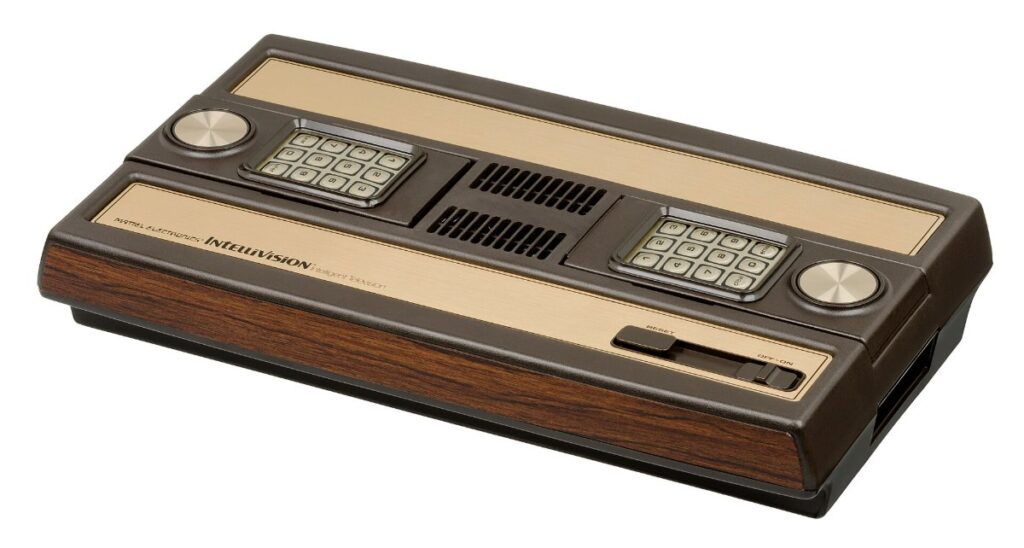

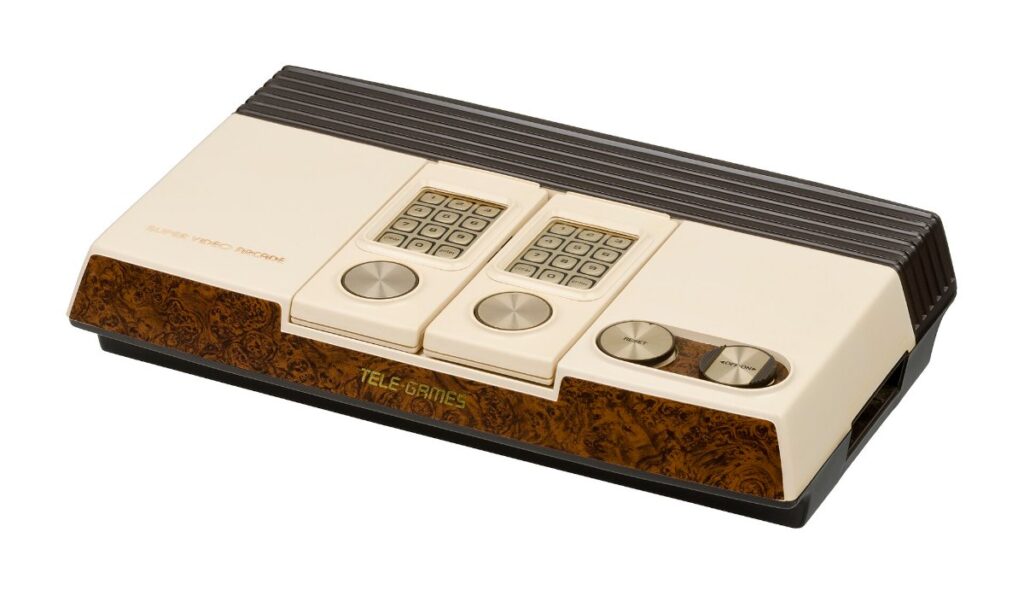
The same console was sold under other names in North America. GTE Sylvania, which built the first consoles for Mattel, sold its own Sylvania-badged version. Sears sold it as the Tele-Games Super Video Arcade, with a beige top and detachable controllers, and sold many of the games in its own boxes. In 1982 Radio Shack sold the Tandyvision One, with wood trim in place of the gold panels. Outside North America, Bandai sold Intellivision consoles in Japan from 1982, and Digiplay sold them in Brazil from 1983.

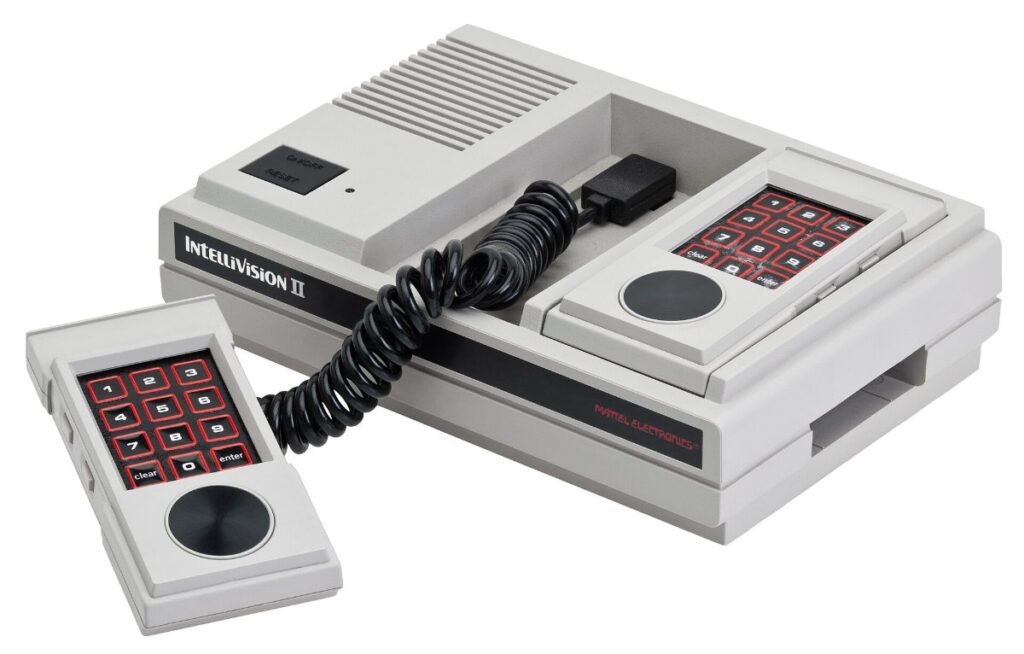
In spring 1983 Mattel launched the Intellivision II, a smaller and cheaper redesign with detachable controllers and an external power supply. It was sold in North America (with BurgerTime in the box in the United States and Lock ‘n’ Chase in Canada) and, from 1984, in Brazil by Digiplay. According to Wikipedia, Brazil was the only country outside North America to get it, so Europe never had an Intellivision II. Mattel changed the console’s built-in software to stop some third-party games running, and some of Coleco’s cartridges, as well as Mattel’s own The Electric Company: Word Fun, do not work on it. The list marks them.

Mattel Electronics closed in 1984. Terrence Valeski, one of its former senior managers, bought the rights to the Intellivision and its games with a group of investors, then bought the investors out by the end of 1984. His company, INTV Corporation, kept the console going in North America. It sold Mattel’s remaining stock, then the INTV System III (also sold as the Super Pro System) in 1985, which is the original design in black and silver. INTV also published 21 cartridges of its own, from Thunder Castle in 1985 to Spiker! Super Pro Volleyball and Stadium Mud Buggies in 1989, one of them, Triple Challenge, a compilation of Mattel’s Chess, Checkers and Backgammon. Its licensing deals with Nintendo and Sega made it stop selling the Intellivision in 1990.
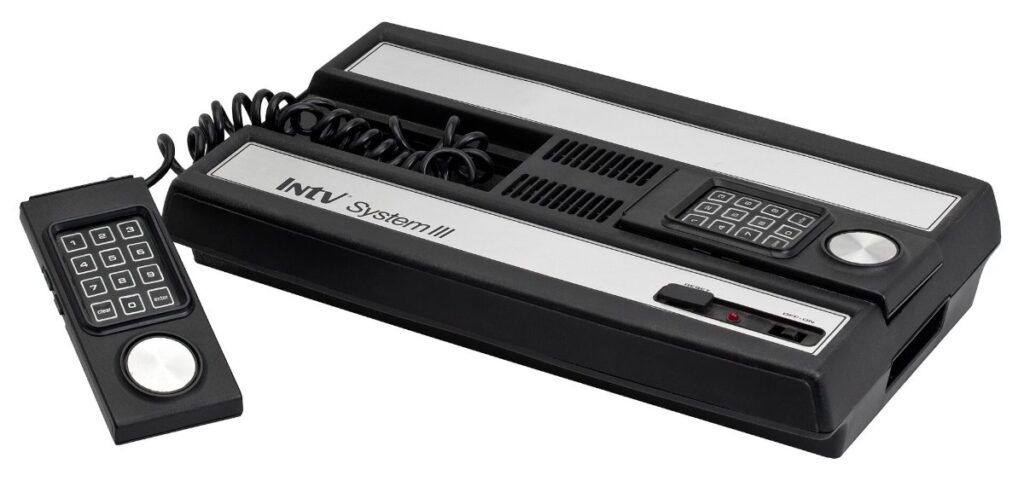

Add-ons that some games need
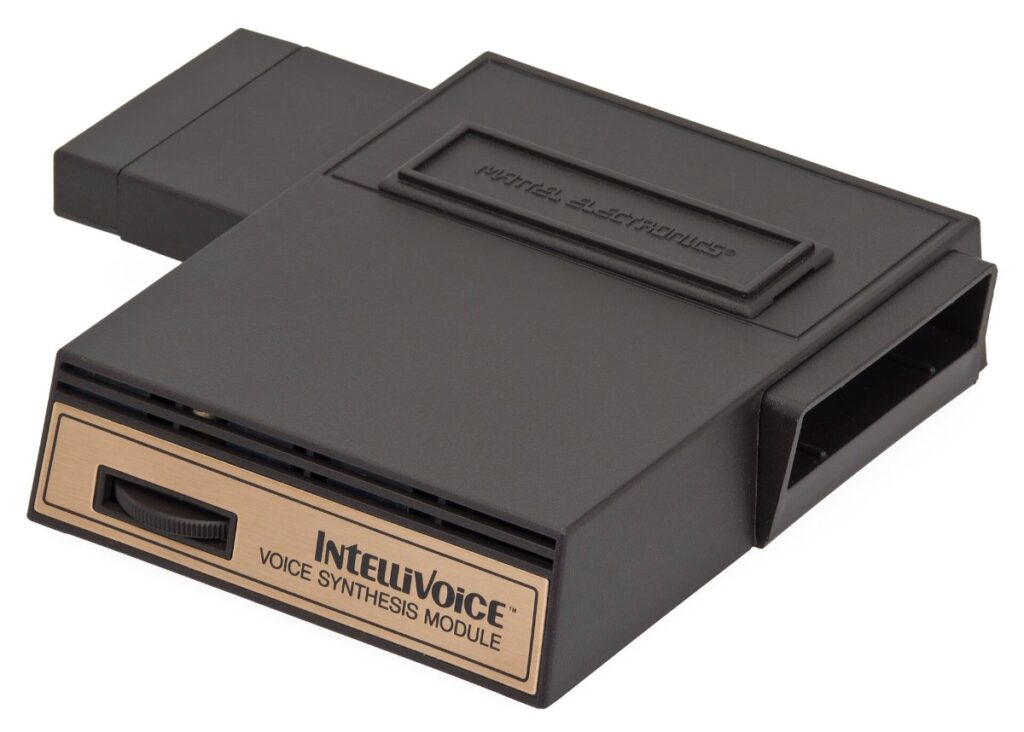
Intellivoice. The Intellivoice voice synthesis module came out in 1982 and plugs into the console’s cartridge slot. Four games were made for it: Space Spartans, B-17 Bomber, Bomb Squad and Tron Solar Sailer. According to Wikipedia, they also run without it, but with no speech. World Series Major League Baseball also talks if an Intellivoice is connected, but it needs the ECS (below). According to Wikipedia, the Intellivoice cost $79 and was dropped in August 1983.

Entertainment Computer System (ECS). The ECS, sold as the Computer Module, adds a little memory, BASIC, a cassette and printer connection, an extra sound chip and sockets for two more controllers. It works with a matching computer keyboard and a 49-key music keyboard, the Music Synthesizer. Mattel showed it in January 1983, but it did not reach the shops until late December. Six cartridges were made for it: Mind Strike, Mr. Basic Meets Bits ‘n Bytes, Scooby Doo’s Maze Chase, The Jetsons’ Ways with Words, Melody Blaster and World Series Major League Baseball. Dextell’s World Cup Soccer also lets four people play when the ECS is connected.
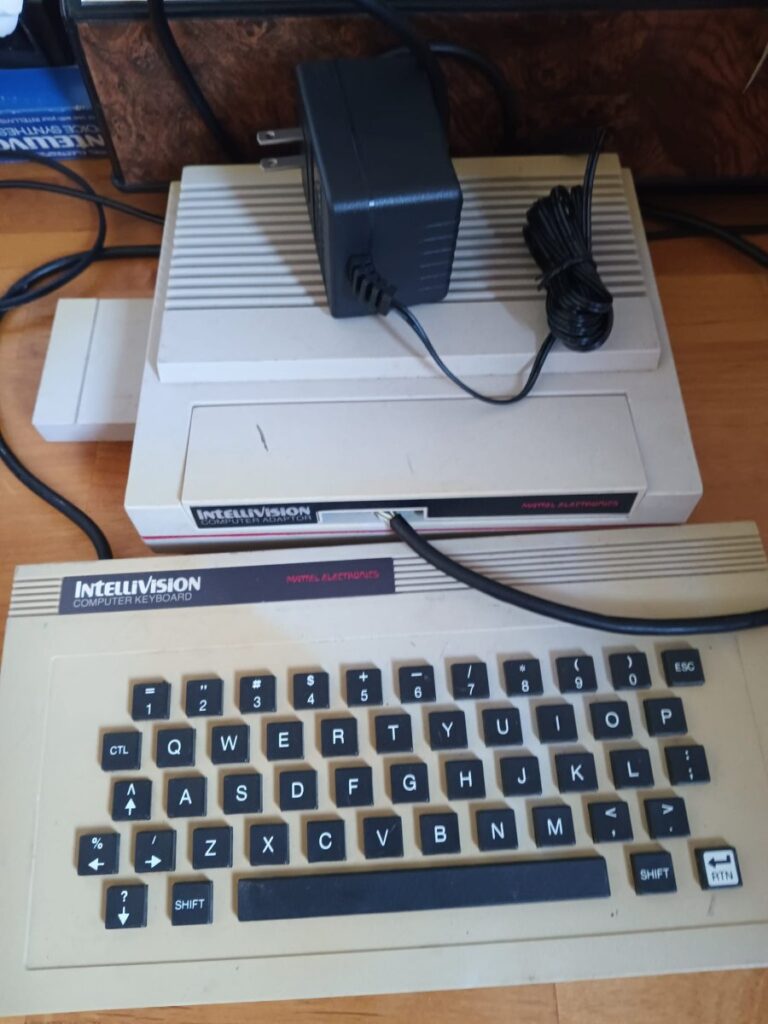

Keyboard Component. From the start, Mattel promised a Keyboard Component that would turn the Intellivision into a home computer with a cassette drive. It was only test-marketed in a few parts of the United States, and Mattel later offered to buy the units back. Its software is not in the main list, because it works only with the Keyboard Component:
| Keyboard Component software | Type | Year |
|---|---|---|
| BASIC | Cartridge and cassette | 1980 |
| Conversational French | Cassette | 1981 |
| Jack LaLanne’s Physical Conditioning | Cassette | 1981 |
| Crosswords I, II and III | Three cassettes, need the BASIC cartridge | 1982 |
| Family Budgeting | Cassette, needs the BASIC cartridge | 1982 |
| Geography Challenge | Cassette, needs the BASIC cartridge | 1982 |
Games released later, and homebrew
This list stops at the games sold while the Intellivision was on the market. In 1997, Keith Robinson and Stephen Roney, two former Intellivision programmers at Mattel, obtained the rights to the Intellivision and formed Intellivision Productions. It released many games that had never come out, first for computers: Mattel’s never-released King of the Mountain and Takeover on its Intellivision Lives! and Intellivision Rocks compilations, and INTV’s Deep Pockets: Super Pro Pool & Billiards, finished in 1990, as a download in 1997. Some of these later appeared on cartridge too. New homebrew cartridges are still being made today by small publishers and fans. None of these are in the list, because they were not sold while the console was on the market.
How this list was made
I started from the tables of released games on Wikipedia’s list of Intellivision games and checked every title against three other sources: MAME’s Intellivision software lists, the No-Intro database of Intellivision cartridges, and INTV Funhouse’s catalogue of every known box and cartridge variant. Every game in the list is in at least three of these four sources. The release years are Wikipedia’s North American dates, except for Dextell’s two games, which show their European year. The regions come from INTV Funhouse’s catalogue (European, Canadian and Brazilian boxes, European-language manuals, and the Sears, Bandai, Digiplay and CBS Electronics cartridges), Classic Consoles Center’s notes on PAL releases, the Intellivision World FAQ, intellivision.us and the Wikipedia articles on the console, with period sources for the UK launch. A game with no “Europe” in the list may still have been sold there: some late games went to Europe in American boxes with local instruction sheets, and those are hard to trace. If you know of a European, Japanese or Brazilian release that is missing, please tell me.
Questions people ask
How many games were released for the Intellivision?
125 cartridges between 1979 and 1989: 61 from Mattel Electronics, 43 from other publishers and 21 from INTV Corporation. Wikipedia also counts 125: 124 games and one compilation. On top of these come the Keyboard Component’s few cassettes, which were only test-marketed.
Will American Intellivision games work on a UK console?
Yes. Intellivision cartridges have no region lock, so American and Canadian cartridges work in a UK (PAL) console. The two known exceptions are Mattel’s Motocross and Activision’s The Dreadnaught Factor, which do not work on a PAL console.
Which Intellivision games were only released in Europe?
Parker Brothers’ Super Cobra and Tutankham were sold in Europe but never in the United States (both were also offered in Canada). Dextell’s World Cup Soccer and Championship Tennis, finished in France, came out in Europe in 1985, a year before they reached North America.
If you collect for other consoles, see the PAL NES games list and the PAL SNES games list, and for more retro gaming see the Retro section.
Sources
Wikipedia: list of Intellivision games; Wikipedia: Intellivision; MAME Intellivision software list and ECS list; No-Intro Intellivision list (libretro database); INTV Funhouse: game variants, Mattel Electronics, CBS Electronics, Digiplay and FAQ; Classic Consoles Center: Intellivision NTSC and PAL games list; Intellivision World FAQ and November 2006 news; intellivision.us: Mattel game trivia; New Scientist, 18 December 1980, p. 782 (transcription); Sinclair User, October 1983; Trade & Play catalogue (Edmonton); Wikipedia: Kool-Aid Man (video game); Game Tech Wiki: Keyboard Component; Wikipedia: Atari 2600; ONS: long-term indicator of consumer prices (CDKO), for today’s money.